

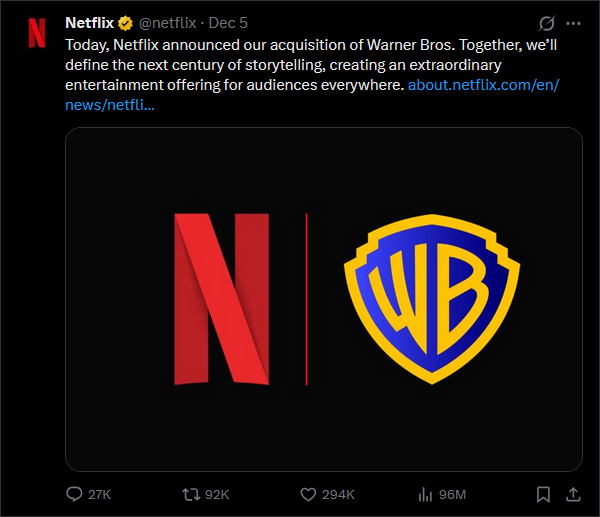
Netflix’s surprise agreement to buy Warner Bros Discovery’s film and TV studios and streaming arm has sent shockwaves through Hollywood and Washington.
Depending on which headline you read, the deal has been reported as roughly $72–83 billion in cash-and-stock value; Reuters pegs the price at about $72 billion while other outlets report figures nearer $82–83 billion as different deal components and formats are tallied.
This is one of the biggest entertainment tie-ups in decades and — if it clears regulators — a landmark moment for streaming consolidation.

Why Netflix did it (and why Warner agreed to sell)
Several forces pushed this transaction across the finish line:
- Scale and libraries matter.
Netflix already competes on scale (global subscribers, data-driven content) but acquiring Warner’s deep film and TV catalog (HBO, DC, “Game of Thrones”, Warner Bros. film slate) supercharges its content moat and licensing power.
That library also gives Netflix valuable theatrical releases and franchises it can monetize across streaming, theatrical windows and merchandising. - A tough economics environment for standalone streamers and studios.
Since the streaming boom cooled (post-2022) and following industry shocks such as strikes and subscriber slowdowns, ownership of expensive franchises has become a defensive necessity.
Warner Bros. Discovery’s management has also been under pressure from shareholders to maximize value, and selling the studio/streaming division is an expedient way to unlock value and reduce corporate complexity. - Consolidation momentum.
Netflix’s move follows other big media maneuvers (including recent deals in the same period) and fits the broader “winner-take-most” dynamic in tech and media — a few global platforms owning the most-watched content. For Netflix, buying Warner is both offensive (growth, expanding IP) and defensive (pre-empt competitors).
What will happen to HBO / HBO Max?
Short answer: uncertain but likely transitional.
Warner’s CEO publicly told staffers that HBO Max “will stay” for now and that Netflix plans to keep theatrical releases for key studio projects, suggesting Netflix is trying to reassure employees and partners about continuity. But outlets report Netflix has also signaled it could maintain HBO/HBO Max as a “discrete service” in some markets or fold key library content into Netflix’s main service — the final architecture will likely depend on regulatory conditions, international rollout plans and commercial negotiations.
In short: HBO’s brand and content are being preserved as core assets, but exactly how they’re packaged (standalone app vs. integrated into Netflix) may change over 12–18 months.
Netflix itself said it expects the regulatory and closing process to take 12–18 months — a window during which many strategic decisions (and concessions to regulators) could be made.
Reactions across Hollywood, Wall Street and politics
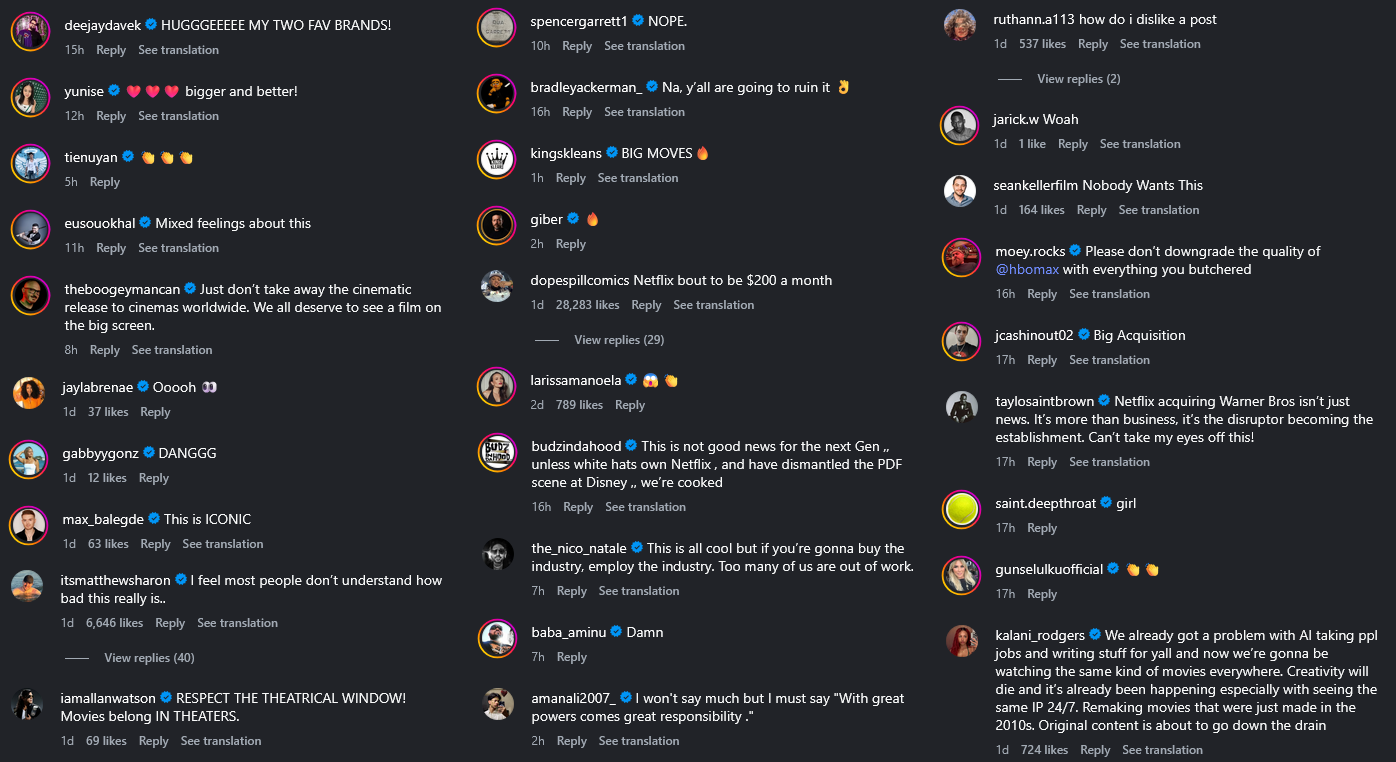
- Hollywood guilds, creators and unions: There’s strong pushback. Actors’ and writers’ guild leaders, union reps and some prominent artists warn consolidation could reduce buyers for content, weaken bargaining power and risk job losses. Industry figures like Jane Fonda have joined calls urging regulators to block the deal.
- Competitors and bidders: Paramount/Skydance has publicly complained about the sale process and even sent formal letters suggesting the process favored Netflix; this has fueled media reporting on rival bids and shareholder tensions.
- Wall Street and analysts: Analysts are divided. Some argue the scale and IP advantages justify the price and long-term growth prospects; others warn about regulatory risk, integration complexity and the danger of overpaying in a market where global subscriber growth is slowing.
- Politicians and regulators: Progressives like Senator Elizabeth Warren have been publicly critical of the consolidation, warning of antitrust problems and consumer harm. The White House’s reported skepticism and vocal anti-monopoly voices in Congress mean legal and political headwinds are real.
The Trump factor: skepticism in Washington
Multiple outlets report that the White House and the Trump administration’s senior officials view the deal with “heavy skepticism”, according to a senior official cited by CNBC and covered by Fox Business.
That phrasing indicates the administration sees potential competition and national-market-concentration issues, though (as of reporting) President Trump himself had not issued a full public statement specifically endorsing or opposing the deal.
That skepticism matters because antitrust reviews — at the DOJ, FTC and by foreign regulators — are the most tangible obstacle to closing a mega-merger like this.
Context helps: Trump previously criticized big media mergers (notably AT&T’s 2018 Time Warner purchase), saying they concentrated too much cultural power.
The administration’s posture now suggests regulators will scrutinize whether one streaming giant owning another major studio and HBO’s premium brand would harm consumers, creators or competition. Variety and Deadline analysts have flagged regulatory risk and the potential for prolonged review.
What’s most likely to happen next
- A long regulatory review with possible concessions. Expect a months-long (12–18) review in the U.S. and parallel scrutiny abroad. Netflix may face demands to divest certain assets, license content to rivals, or keep HBO as a separate entity for a period.
- A PR and labor-management tug of war. Netflix will spend heavily on messaging (jobs saved, continued theatrical releases); unions and cultural figures will continue to push for protections for workers and local production. Some layoffs seem probable as duplicate corporate roles are rationalized.
- HBO’s brand likely retained but repackaged. Most probable near-term outcome is HBO remains a distinct premium brand while some library content is made available on Netflix, with longer-term decisions influenced by regulator-imposed conditions and commercial tests in international markets.
- Industry consolidation accelerates (if the deal closes). Other studios and streamers may pursue mergers or alliances to remain competitive, further compressing the competitive landscape. That will amplify antitrust debates about whether a few platforms should control both distribution and huge swaths of content.
- Consumer-facing effects are mixed. Viewers may gain simpler access to lots of content on one platform but face fewer independent choices and potential price increases over time. The real test will be whether Netflix manages to monetize the new franchises and theatrical releases without alienating consumers.
The road ahead for streaming and Hollywood
This deal — if completed — would mark a turning point in how movies and TV are owned, distributed and monetized. Netflix gains unrivaled production and IP power, but also inherits regulatory risk, union anxieties and the challenge of integrating a century-plus studio culture into a data-driven streaming giant.
Whether this is an era-defining consolidation that benefits consumers through investment in new content, or a concentration that squeezes competitors, creators and choice, will depend on months of regulatory hearings, negotiation and the deals Netflix makes about HBO, theatrical windows and labor protections.
Expect a prolonged, politically charged review — one where “heavy skepticism” in Washington is a real obstacle to watch closely.
