

Lupin III has completed so much over the a long time, however this could be the boldest trick within the franchise’s lengthy historical past: a full kabuki manufacturing that drops the gentleman thief and his crew into feudal Japan. The result’s much less a novelty stunt than a pointy reminder that Japan’s greatest pop-culture icons don’t simply survive by repeating themselves — they survive by altering form.
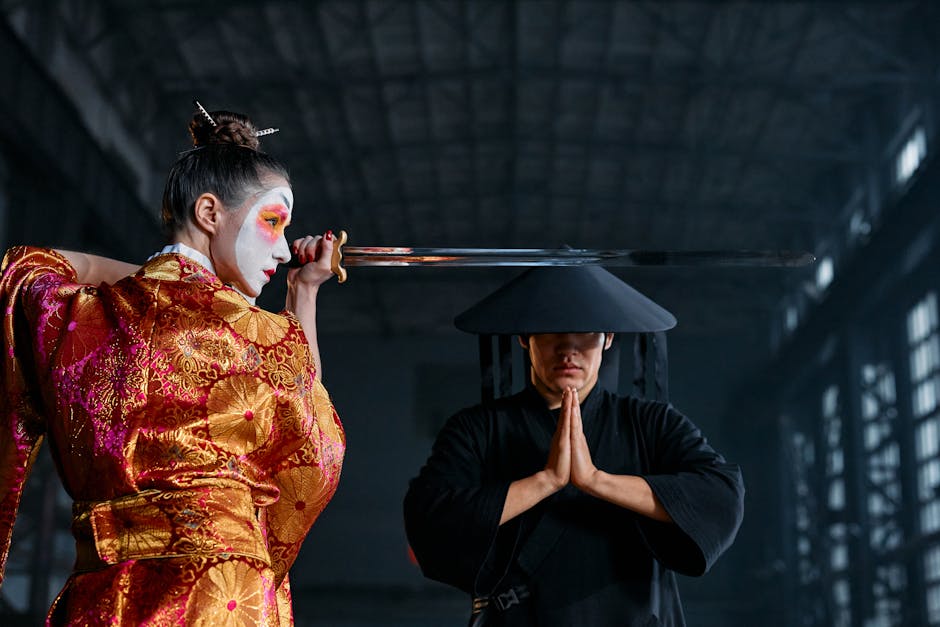
The brand new Lupin III: The Stunning Azure Fortress kabuki play takes considered one of anime’s most recognizable properties and filters it via considered one of Japan’s oldest and most formal efficiency traditions. That collision is the entire level. Lupin isn’t being preserved behind glass; he’s being reimagined in an area the place exaggerated motion, stylized speech, and elaborate visible symbolism already rule the stage.
When anime meets centuries-old theater
Kabuki has all the time been a medium of heightened id. Costumes are loud, make-up is coded, and each gesture carries that means. Put Lupin III into that world, and out of the blue the franchise’s normal swagger — the disguises, the escapes, the theatrical confidence — feels much less like a gimmick and extra like a pure match.
That issues as a result of this isn’t simply “anime on stage.” It’s a reminder that Japanese popular culture has by no means lived in separate packing containers. The road between excessive artwork and mass leisure has all the time been extra porous than outsiders assume, and this manufacturing leans arduous into that actuality. In several phrases, it treats anime not as one thing fashionable and disposable, however as materials worthy of classical interpretation.
Why Lupin nonetheless works in spite of everything these years
A part of the explanation Lupin III retains getting reinvented is that the character was constructed for adaptation within the first place. Lupin is a thief, a shapeshifter, a performer. He belongs in a narrative about masks, standing, and spectacle. Kabuki, with its personal obsession with transformation and dramatic persona, provides that id a recent body.
The feudal Japan setting additionally provides a layer of irony. Lupin’s world is often outlined by modern modernity, spycraft, and pop-culture cool. Dropping him into an older historic setting strips away the standard visible shorthand and forces the viewers to see what’s left: charisma, timing, and the flexibility to command consideration regardless of the period.
And that’s the actual attraction right here. Legacy franchises don’t keep alive simply by being remembered. They keep alive by proving they’ll nonetheless shock folks.
A crossover with cultural weight
There’s a industrial facet to this, in fact. Excessive-concept variations like this aren’t made on accident. They entice longtime followers, stage-curious theatergoers, and the form of viewers that desires to see what occurs when a well-known model is pushed into unfamiliar territory.
However the larger story is cultural. Japan retains exporting anime as a contemporary international language, but productions like this present that the nation’s older traditions are usually not being left behind. They’re being folded again into the dialog, generally in ways in which really feel playful, generally in ways in which really feel nearly radical.
Lupin III in kabuki kind isn’t a detour. It’s an announcement about how Japanese tales endure: by refusing to remain in a single medium, one century, or one definition of cool. If this experiment lands, anticipate extra franchises to begin eyeing the stage as the following place the place previous icons can develop into new once more.
